Coming soon · 20.11.2026 · 18:00 · MMAMM · FLAT
Short film · Speculative documentary · Mendoza, Argentina · 2026

ESPORA.

What happens when the machines that make almost everything end up in the hands of local networks?

20.11.2026
18:00 hs

MMAMM · Museo Municipal de Arte Moderno de Mendoza
Within FLAT festival · Mendoza, Argentina

The film is not online yet. Until the premiere, this page shows fragments: the graphics, the world and the questions underneath it.

ESPORA is a short speculative documentary by Alejandro Rodríguez and Martín Sánchez, with original music and sound by Nicolás Behler (NHBC).

A filmmaker arrives in Mendoza after a friend sends him a few videos: young people automating greenhouses, growing mushrooms, printing houses in the desert. What he finds is not a commune but a federation of cooperatives: more than a hundred cells, each bringing one real capability, connected into a network that produces first for its own members.

It is shot like a documentary about something that does not exist yet. Nothing in it needs a technological miracle, only things that already exist coinciding in time. And when the first cell is evicted and torn down, the question becomes whether a network without a center can lose its most symbolic place and keep growing.

Teaser

ESPORA was created by Alejandro Rodríguez, Martín Sánchez and Nicolás Behler, three artists and filmmakers from Mendoza whose practices cross cinema, technology, music, digital culture and experimentation. Nobody explains ESPORA whole: each one comes at it from a different obsession, and their answers don't add up.

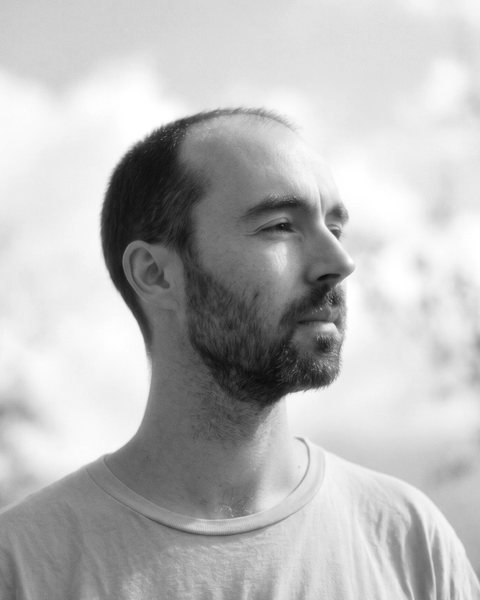
Martín Sánchez

Martín Sánchez

Visual and cinematic language · direction

Works in filmmaking and image-making. With Alejandro he builds the visual and cinematic language of ESPORA, with a very specific aim: that a future that doesn't exist should look found, everyday and plausible, not like spectacular science fiction. His work centers on staging, building characters and spaces, editing, and new image-generation tools used toward a documentary look. At the core of his gaze is the border between fabricating an image and making the viewer feel it could be happening right now.

Would we want to live in that future?
In that universe, the only thing that sets it apart from here is that some things coincide in time.
I'm not interested in the viewer doubting it. I want them to see it as possible.
If it means fighting with the bots all day, no.
Alejandro Rodríguez

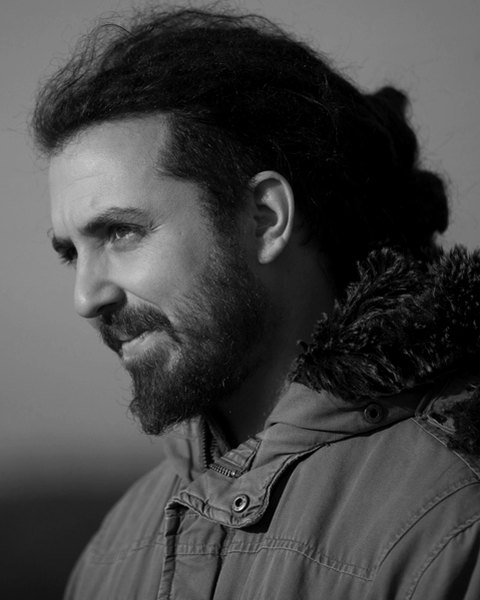
Alejandro Rodríguez

Original idea · universe · script · direction

Filmmaker, audiovisual artist and creative technologist. His work moves between cinema, animation, digital tools, programming, artificial intelligence and interactive systems. For more than a decade he has been researching automation, cooperativism, new forms of production and decentralized technologies. ESPORA was born from those questions: what happens when producing needs less and less human work, who controls that productive capacity, and what other forms of organization could grow around it.

Who owns the future?
Who owns it? Who benefits? What happens to the surplus?
The original plan was a fake documentary, and for the fake documentary to be the first step toward making it real.
It's a utopia of today: today we could do something like this.
Nicolás Behler · Elmayonesa

Nicolás Behler · Elmayonesa

Music · sound universe · concept

Musician, producer and electronic artist with a long trajectory between Mendoza and Europe. He lived in Berlin for many years, active in electronic music, queer culture and underground art scenes, represented Estonia at Eurovision, and has run many musical and performance projects around electronics, digital cumbia, humor, cultural syncretism and peripheral identities. His research Underdevelop Is The Real Develop claims underdevelopment and the periphery not only as lack, but as places open to transformation, mixture and new cultural forms. In ESPORA he composes and selects the music, shapes the sound and brings a key conceptual view on periphery, popular culture and futures made far from the centers of power.

Where is the future invented from?
Underdevelop Is The Real Develop.
The periphery is what's far from the ranking of power.
I'm very interested in synthesis, in everything that's neither one thing nor the other, where that new third thing appears.

Alejandro comes at ESPORA from economic, technological and political structures; Martín from building a possible cinematic reality; Nicolás from music, culture and the periphery's capacity to produce its own futures. ESPORA appears where the three meet: who owns the future, how we manage to see it, and where we choose to imagine it from.

The film never stops to give a lecture. These graphics, made for it, carry the logic in a few seconds each.

01The cell

A cell is not a branch office. It is a group that brings one real capability (growing food, building, coding, transporting, teaching, repairing) and keeps its own knowledge and decisions. The network grows by connecting capabilities, not by cloning one way of life.

02Who owns the machines

A company raises money by selling a piece of itself. A co-op can't: nobody owns more than the people who work there. So the money comes from the other side, from the people who use what the cells make.

03The price goes down

Every system the members buy or build lowers their own price. The work is done by hand until the automation is ready. Once it is paid for, it makes things for free. Free for the members.

04When nobody is left working

...the work is governing: deciding what to make and where the money goes.

05Spores

What a cell sells outside pays for the next one. The surplus goes to a common bank and turns into new cells: farms, labs, brickworks, homes.

06The membrane

Not a geographic border: the moving line between what the network can already solve inside and what it still has to buy outside. Every new cell moves it. Money stays as the interface with the outside (rent, fuel, medicine) and the question is what happens as that list gets shorter.

An automated hydroponic plant
The videos that started it
Mycology: food and materials
Printed housing
Mycelium furniture
An automated flower dome
Small red shrines
Another dot on the map

Who owns the future?

If producing needs less and less human work, the question shifts: who controls the machines, how what they make circulates, and who keeps the surplus.

How much money would it cost to stop using money?

ESPORA doesn't abolish money overnight. It asks how short the list of things you still have to buy outside can become.

Coincidence, not miracles

Nothing in ESPORA requires a technological leap. Its only extraordinary feature is that people, tools and will that already exist happen to coincide.

Underdevelop Is The Real Develop

The future doesn't have to be imported from a center. From a periphery like Mendoza, with its culture of repair, improvisation and digital cumbia, something unfinished keeps the chance to become a third, new thing.

Without a center

Antonio Gil was killed, and small red shrines kept appearing along the roads: one here, then another farther on. No central church planting branches. When they tear down a cell, the network keeps growing.

Where it comes from

The factories recovered by their workers after Argentina's 2001 crisis showed that a plant doesn't forget how to produce when its owner disappears. La Salada showed that peripheral networks can reach enormous scale without a central design, with contradictions ESPORA can't copy.

MartínIt exists, somehow. I don't know if I would live there.
NicolásIt doesn't exist yet, but it's doable. And yes, I would live there.
AlejandroIt exists as an idea. I wouldn't move: I would live where I am and let the membrane absorb me.

The first ESPORA was a hypothesis. The next one should be a search.

A film by
Alejandro Rodríguez · Martín Sánchez
Music & sound
Nicolás Behler (Elmayonesa) / NHBC · original music and sound mastering
Songs
“Degustación de Ayahuasca Fallida” · Taita World Cup feat. Robin Chakruna
“Aegh” · RLHBSLCN
“Gauchito Gil” · Faauna (Federico Rodríguez & Cristian Del Negro)
Graphic design
José Giménez / R3ND3R
← All live projects